Buyer's guide


If you’re anything like me, you live, breathe, and dream about Nissan’s iconic sports cars like the Nissan S13. However, not all S13 were created equally and a handful of lucky people had access to the S13 with a CA18DET engine.
You might not have heard of the CA18DET before as it was only available during the first years of S13’s introduction in Japan and for the European market.
In this article, we’re going to strip down this mighty little motor to its bare bolts and reveal everything you need to know.
We’ll dive into the nitty-gritty specs, compare it to its siblings in the Nissan family, break down the engine components, and explore how it roared its way into the S13. And if you’re thinking about squeezing some extra ponies out of this beast, we’ve got the lowdown on tuning and upgrades too.
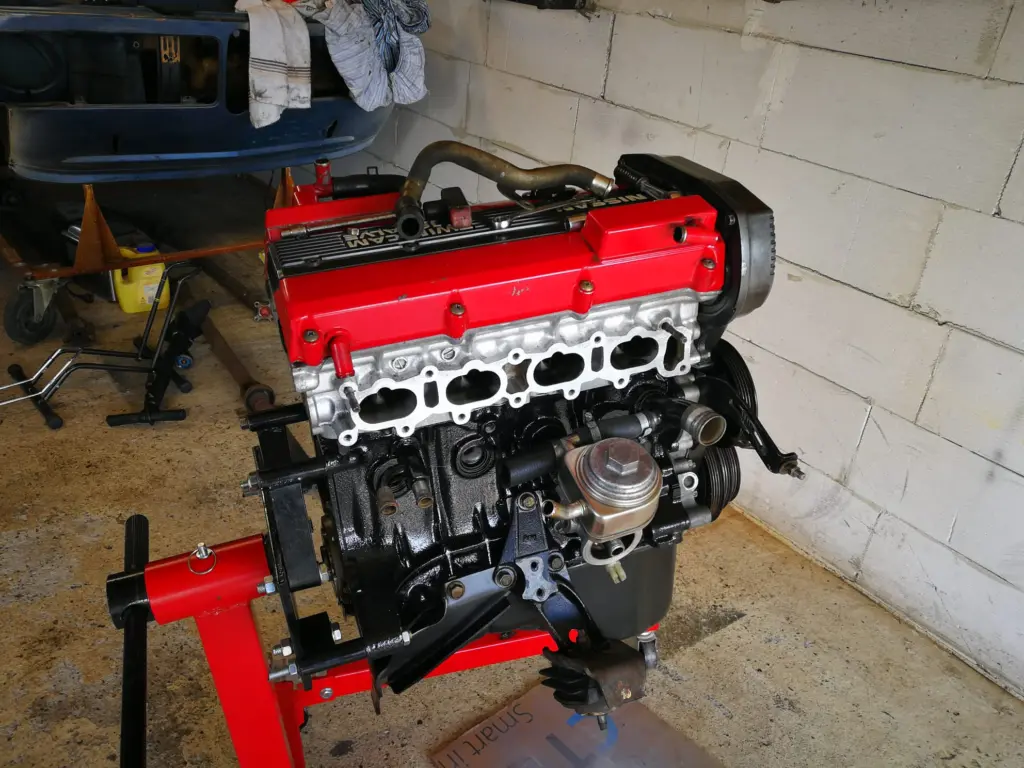
The CA18DET might be a tiny engine but it packs some pretty impressive specs. It is now wonder that the CA18DET has such good tuning potential. Let’s dive into the specifications.
Engine Displacement: 1.8 liter
Cylinder Arrangement: Inline 4
Compression Ratio: 8.5:1
Stroke: 83.6mm
Bore: 86mm
Power Output: 176hp @ 6200RPM
Torque Figures: 164 lb-ft of torque @ 4000RPM
Performance Metrics: 0 to 60 mph times in the 7-second range
Cylinder block: Cast iron semi-closed deck with under-piston oil squirters
Cylinder head: Aluminum with 4 valves per piston
It may be compact, and underwhelming for in modern times. But the CA18DET is no slough and with a little bit of tickling can be an incredibly fun engine.
The CA18DET engine, a beloved powerplant among Nissan enthusiasts, found its home in several iconic Nissan models. These cars not only defined an era of Japanese sports car greatness but also became the canvas for tuners and drifters alike. Here’s a rundown of the notable vehicles that were fortunate enough to feature the CA18DET engine:
The CA18DET made its debut in the S13 generation of the Nissan Silvia. This lightweight, rear-wheel-drive coupe was a drift king’s dream, thanks in no small part to the nimble CA18DET engine’s presence under the hood. The CA18DET was phased out in 1991 and replaced with the SR20DET.
The 180SX is essentially the hatchback version of the Silvia S13 and shares the same CA18DET engine. It offered a sporty, compact package and became a popular choice among drifting enthusiasts. The 180SX came with a CA18DET until 1991, after which it received the SR20DET.
In Europe, the CA18DET powered the Nissan 200SX, the european version of the S13 and S14. Only the European S13 came with a CA18DET, and the S14 received an SR20.
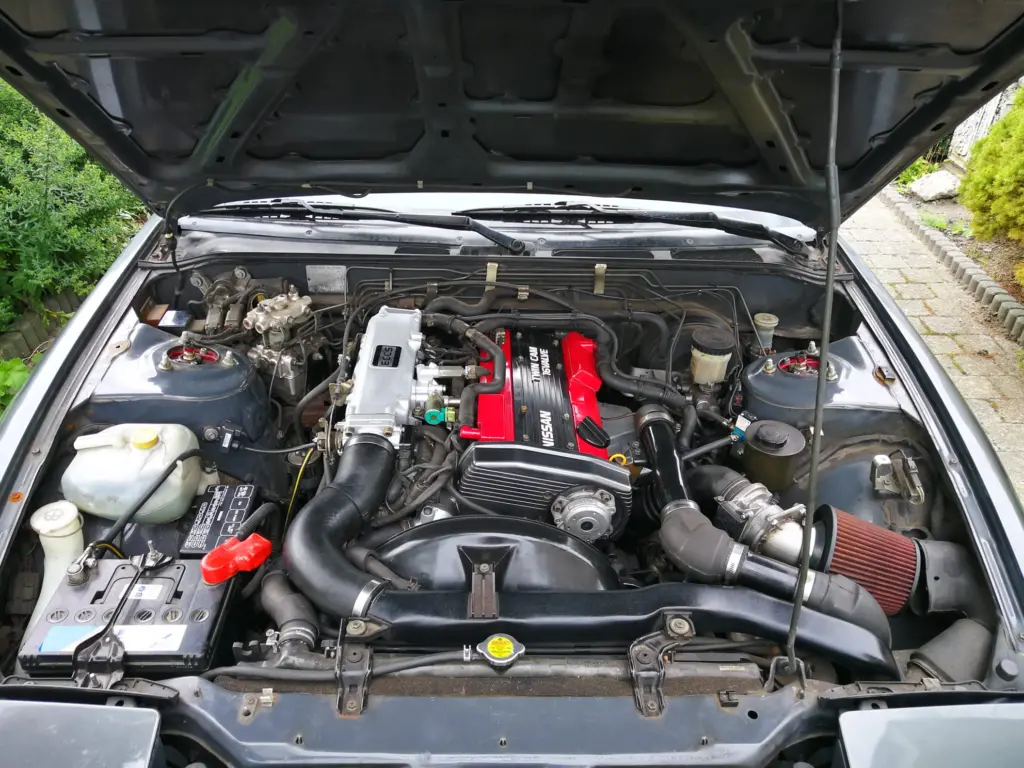
Some versions of the Nissan Bluebird, particularly the U12 chassis, were equipped with the CA18DET engine. While it may not have had the same sporty reputation as the Silvia, it offered a unique blend of power and practicality.
The CA18DET also found its way into certain versions of the Nissan Pulsar, particularly those in the N13 chassis. This compact hatchback combined everyday usability with a turbocharged punch.
These cars, with the CA18DET engine at their core, have left an indelible mark on the world of Japanese sports cars.
It’s time to talk tuning and upgrades – the path to squeezing even more power and performance out of this engine. Let’s dive in and discover how to unleash the beast within!
Bolt-On Power: We’ll start with the basics – bolt-on upgrades. From intakes and exhausts to intercoolers and blow-off valves, we’ll explore the world of simple, yet effective modifications that can give your CA18DET a noticeable power boost. These are some of the easiest upgrades you can make to your CA18DET:
Replacing the stock air intake system with a CAI allows your CA18DET to breathe better. Cold air intakes draw cooler, denser air into the engine, resulting in improved throttle response and increased horsepower. There is a difference between a short air intake and a cold air intake. You want to draw in fresh cool air for the benefits.
Upgrading your exhaust system, including headers and a performance exhaust, can enhance exhaust flow. This reduces backpressure and unlocks extra power while giving your CA18DET a more aggressive exhaust note. A 2,5 to 3-inch exhaust system will free up the engine and make it breathe easier.
An upgraded intercooler can help cool the compressed air before it enters the engine. Cooler air is denser, leading to more efficient combustion and increased horsepower. Most people opt to ditch the side mount intercooler and go for a full front mount intercooler. This increases cooling capacity and reduces intake temperatures. Reducing intake temperature is vital for the safety of your engine when you are pushing higher power figures.
Swapping out the stock turbocharger for a larger, more efficient unit is a common mod for turbocharged engines. This can result in a significant power boost. The CA18DET uses turbocharger technology from the 80s. You can get a significant boost increase without adding lag to the system. A turbocharger upgrade often needs supporting modifications as well such as injectors, ECU, FMIC, etc.
A boost controller allows you to control the amount of boost your turbocharger produces. This is crucial for fine-tuning performance, ensuring both power gains and engine safety. You can play with the stock boost a little bit for an easy power bump without the need for standalone ECUs and other supporting mods. There is however a limit. A good boost controller paired with a modern ECU can give very precise boost control allowing you to fine-tune more easily. There are a couple of different styles available offering different functionality.
As you increase airflow and boost, upgrading your fuel injectors and fuel pump becomes essential to provide adequate fuel to the engine. Proper fueling ensures optimal combustion and prevents lean conditions. This is an essential upgrade if you are looking to make more power. Aftermarket injectors often need a modern standalone ECU.
Investing in a standalone engine management system allows you to fine-tune fuel and ignition timing. This is crucial when making significant power upgrades to your CA18DET. A modern ECU is expensive but in my opinion a game changer. It allows fine control over all engine inputs and outputs, is easy to tune, and has a ton of safety features built in so you don’t destroy your newly built engine when something goes wrong.
Consider upgrading your BOV and wastegate to enhance turbo response and control. A BOV also gives the characteristic turbo whistle that we all love. When you still rely on your MAF sensor you will need to plumb back the air from the BOV to maintain a properly running engine. If you have a MAP sensor you can plumb into the atmosphere giving you even more blow-off sounds.
When you are making significantly more power it is only a matter of time before your clutch starts to slip. Upgrading to an aftermarket clutch designed for the horsepower numbers you want to make is an essential upgrade to any build.
Replacing the stock flywheel with a lightweight one reduces rotational mass, improving engine responsiveness. This is not for everyone as it can make the car a bit harder to drive. You want to get a high-quality flywheel to ensure that the engine remains balanced.
High-performance spark plugs and ignition coils can enhance spark intensity, improving combustion efficiency and throttle response. The old plugs and coils can be 40 years old. A common upgrade is to get Nissan R35 coils or the red Audi R8 coils (really just a standard VW coil). There are adapter kits available for each option.
Before diving into bolt-on upgrades, it’s crucial to have a clear goal in mind and consider the overall compatibility of these modifications. Additionally, consulting with a knowledgeable tuner or mechanic can help ensure that your CA18DET’s performance upgrades are properly installed and tuned for optimal results.
More power can stress components more than they were designed for. If you are significantly increasing horsepower you might want to look into a fully built engine, meaning rods, pistons, studs, and a multi-layered steel head gasket.
Many of the upgrades described above require supporting modifications to function correctly and safely. Make sure that you have all the right support mods in place before you start cranking the power dial.
To keep your CA18 running like a dream, you need to know the common issues and the TLC (Tender Loving Care) it craves. Let’s get down to the nitty-gritty of maintenance and troubleshooting.
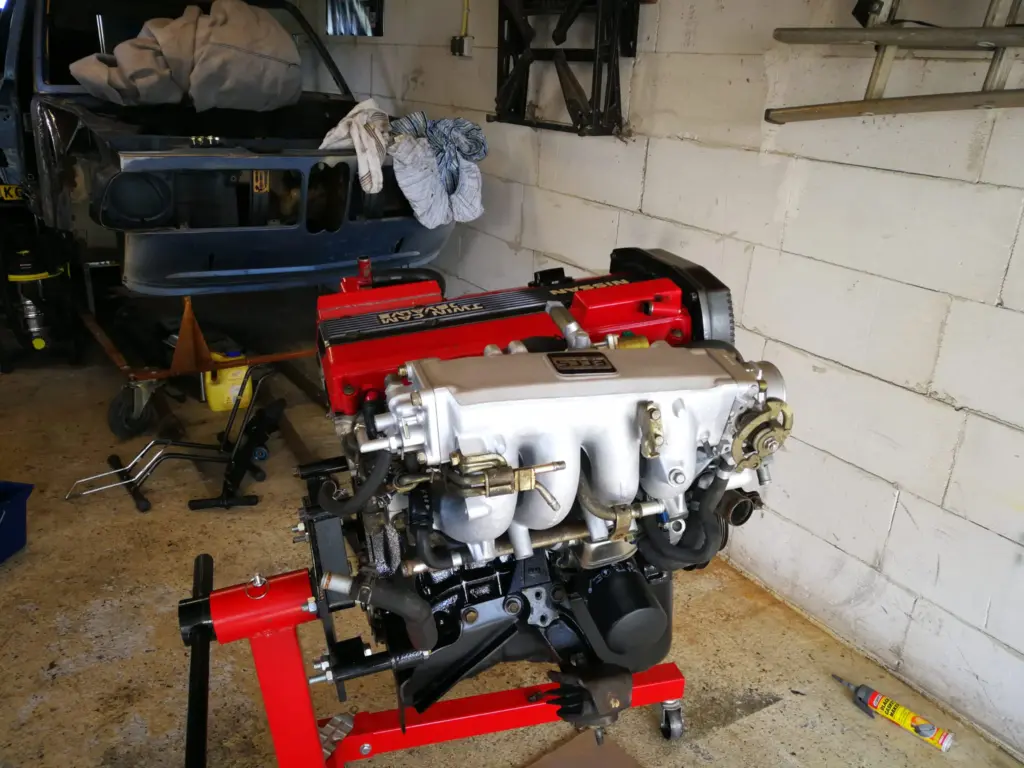
CA18DET engines are notorious for oil leaks. To find oil leaks you can degrease the engine as best as you can, drive it for a bit, and then check for fresh oil. Oil from the top often means valve cover gaskets and leaks all the way at the bottom can indicate a leaking oil sump gasket. Oil leaks are pretty easy to spot and although time-consuming, not difficult to repair.
The turbo is the heart of your engine’s power, but it can also be a source of trouble. The OEM turbochargers can be 40 years old and when they are tuned for more boost can become troublesome. White smoke from the exhaust can indicate a blown turbocharger. With age, you might also experience extensive play in the turbine wheels.
Overheating can be a nightmare, especially when you’re pushing your CA18DET hard. Old radiators can get clogged, thermostats might stop opening, or you might have blown a head gasket. Old cars can often have problems around cooling so if you are pushing for more power we recommend a good aftermarket aluminum radiator such as a Koyo radiator.
A snapped timing belt can lead to catastrophic engine damage. If the car is new to you you might want to check the health of the timing belt. Old or worn belts can destroy your engine so this is a good maintenance check to perform.
Fuel delivery problems can rob your engine of power. If your car has been sitting for a while (good chance it has), you might have clogged fuel filters, clogged pickup tubes, or even clogged injectors. To fix fuel-related issues it often helps to drop the fuel tank, clean it thoroughly, replace all filters, and get your injectors professionally cleaned (usually not that expensive and worth the cost).
Misfires and ignition problems can be frustrating. The ignition system is old and can cause issues. Most ignition issues are caused by the Crank Angle Sensor (CAS). If your engine stops working and your plugs are not sparking you can check your CAS by taking out a spark plug and coil, positioning it in such a way that is grounded and can spark, removing the CAS, and spinning it manually by hand. The spark plugs should be sparking if you have your ignition on. If it doesn’t, your CAS probably gave up.
Over time, your engine may experience compression loss. A compression test is the quickest and easiest way to diagnose compression loss. When you find compression loss in your engine it almost always needs a teardown. Possible scenarios are blown piston rings or valves that are not sealing. You can check for escaping air in the inlets and exhaust before tearing down the engine but in this scenario, a full teardown might give you more peace of mind.
By understanding these common issues and performing regular maintenance, you’ll ensure your CA18DET remains reliable and continues to deliver the thrilling performance you love. Don’t let these challenges scare you off; with the right knowledge, you’ll be ready to tackle them head-on. These are older, not-so-complex engines, and with the right tools and guidance, a lot of issues can be solved yourself.
Let’s take a look at how the CA18DET stacks up against other Nissan engines from the S-chassis platform.
If you’ve been around the block, you’ve probably heard of the SR20DET. It’s another legendary Nissan engine, known for its robust performance. How does the CA18DET compare? We’ll break down the differences and similarities, giving you the inside scoop.
The main difference here is that SR20DET is a newer engine that is fully made out of aluminum, both head and block. This might get you thinking that the SR20DET is the lighter engine but this is not the case! According to most sources, a complete CA18DET engine is around 44 lbs (20kg) lighter than an SR20DET.
Both engines have plenty of aftermarket support but the SR20DET is a clear winner here due to its popularity.
The SR20DET has a bit more performance potential due to its larger displacement and its ability to breathe well.
In the world of Nissan sports cars, two engines often vie for attention – the CA18DET and KA24. The CA18DET boasts a 1.8-liter turbocharged inline-four, offering enthusiasts easy power upgrades with aftermarket turbo and ECU tweaks. On the other hand, the KA24 is a 2.4-liter naturally aspirated inline-four, providing more low-end torque due to its larger displacement.
The CA18DET excels in turbocharged excitement and straightforward power gains. Meanwhile, the KA24 offers a broader torque curve with potential for substantial power through camshaft, intake, and exhaust upgrades. Both engines enjoy robust aftermarket support, but the CA18DET leans towards turbo enthusiasts, while the KA24 suits those favoring a naturally aspirated or supercharged setup. You can turbocharge a KA24 but you will end up spending more money than if you were to upgrade a CA18DET. Personally, I consider the CA18DET the better engine as it fits better within the spirit of the S13.
We’ve covered it all, from the engine’s specs that make it punch above its weight to its spirited sibling rivalry with other Nissan engines. We’ve dissected the engine components, explored its perfect marriage with those iconic Nissan models, and even looked at how you can unlock its true potential through tuning and upgrades.
But it’s not all about power and performance; we’ve also tackled the real-world stuff – the common issues and maintenance that keep your CA18DET running smoothly. Because, let’s face it, the love affair with your Nissan wouldn’t be complete without a little tender loving care.
Whether you’re wrenching in your garage, tearing up the track, or simply admiring your Nissan, you’re doing it with a newfound appreciation for the engineering marvel that is the CA18DET.
So, what’s next for you and your Nissan? Is it time for a turbo upgrade, a track day, or maybe just a scenic drive down your favorite winding road? Whatever your journey holds, remember, that the CA18DET is your trusty companion, ready to deliver thrills and excitement with every turn of the key.

